
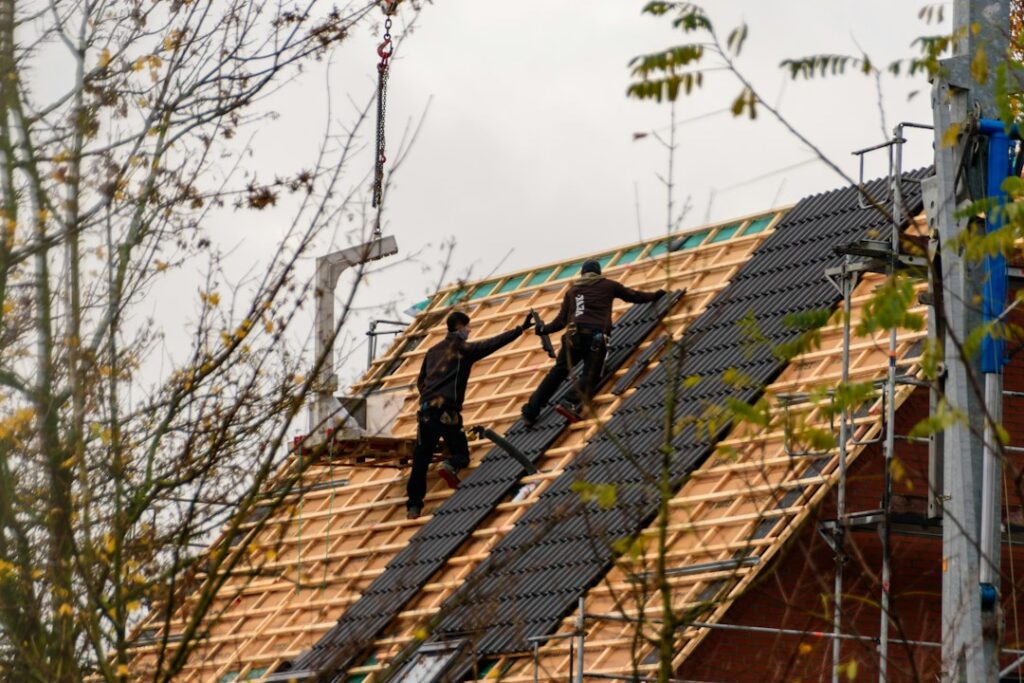
A roof tear-off is the complete removal of existing roofing materials before a new roofing system is installed. For homeowners in Grand Island, NY, the process usually involves preparation, removal, inspection of the roof deck, installation of new materials, and a thorough cleanup.
Understanding the sequence helps explain why the work may create noise, temporary disruption, and unexpected decisions about damaged wood or ventilation.
What happens before the tear-off begins?
Before removal starts, the work area is prepared to protect the house, landscaping, walkways, and nearby property. The roofing crew typically reviews access points, places protective coverings, and identifies locations for collecting discarded materials.
Homeowners may be asked to:
- Move vehicles away from the work area
- Remove fragile wall decorations or ceiling-hung items
- Keep pets and children away from the active work zone
- Secure patio furniture, planters, and other loose outdoor objects
- Keep attic access clear if an interior inspection may be needed
A tear-off can cause vibrations throughout the house. Items that appear securely mounted may shift when workers walk across the roof or remove nailed roofing materials.
Weather also affects scheduling. Roof removal exposes the roof deck, so work is generally planned around dry conditions and manageable wind. In a climate with snow, ice, rain, and freeze-thaw cycles, the roofing system must not be left open longer than necessary.
How long does a roof tear-off take?
Many straightforward residential tear-offs can be completed in one working day, but the full project may take longer if the roof is large, steep, layered with multiple roofing systems, or affected by poor weather.
The timeline may extend because of:
- Multiple layers of old shingles
- Wood decking that needs replacement
- Chimneys, skylights, dormers, or other roof features
- Difficult access to the structure
- Rain, high winds, snow, or cold temperatures
- Limited daylight during shorter winter days
- Extra cleanup caused by brittle or deteriorated materials
The removal itself is often faster than the inspection and rebuilding stages. A roof may look stripped by midday, yet the remaining work can include replacing deck boards, installing underlayment, repairing flashing, and completing ventilation details.
What does the tear-off process look and sound like?
Workers usually remove shingles and underlayment from the upper sections of the roof downward. Specialized tools lift roofing materials, which are then moved toward the roof edge and placed into collection containers or lowered to the ground.
Homeowners should expect:
- Hammering, scraping, and repeated impact sounds
- Workers moving across the roof and around the property
- Shingles or small pieces of debris being lowered or dropped into protected areas
- Temporary coverings over sections of the home
- Foot traffic near driveways, walkways, and exterior walls
Noise is often strongest during removal and nailing. It may be noticeable throughout the house, especially in rooms directly below the roof. People who work from home, care for infants, or have noise-sensitive pets may want to plan around the loudest portion of the project.
What happens if damaged wood is found?
Removing the old roofing exposes the roof deck, usually made from plywood or oriented strand board. This is one of the most useful parts of a tear-off because damage hidden beneath shingles becomes visible.
Common findings include:
- Soft or weakened decking from long-term moisture exposure
- Dark staining or mold-like growth associated with past leaks
- Split, swollen, or delaminated panels
- Deterioration around chimneys, valleys, vents, or roof edges
- Inadequate openings for certain ventilation components
Not every stain means the roof deck must be replaced. The key concern is whether the wood remains structurally sound and provides a stable surface for fastening new materials. Any replacement should be limited to areas that are genuinely damaged or unsuitable.
Homeowners should expect the possibility of additional deck work even when the roof looked acceptable from the ground. A tear-off reveals conditions that cannot be fully assessed through visual inspection of the shingles alone.
Are old shingles removed down to the wood?
A complete tear-off generally means removing the existing shingles, underlayment, and related roofing materials down to the roof deck. In some situations, a roof may have more than one layer of shingles. Removing older layers allows the deck, flashing, and roof edges to be inspected rather than covering existing problems.
Some roofing systems may be installed over an existing layer when local requirements, roof condition, and manufacturer instructions allow it. That approach is different from a full tear-off and provides less opportunity to examine the underlying deck.

A roof with several layers may also be heavier than intended. The actual condition of the roof structure and deck matters more than the appearance of the top layer.
How are flashing and ventilation handled?
A tear-off is an opportunity to inspect details that protect vulnerable areas. Flashing is commonly found around chimneys, sidewalls, roof-to-wall transitions, valleys, vents, and other penetrations.
These areas deserve attention because leaks often begin where roofing materials meet another surface. Old flashing may be bent, rusted, improperly sealed, or installed in a way that does not work well with the replacement roof.
Ventilation is also reviewed during the process. A balanced system generally uses intake openings near the lower roof edges and exhaust openings near the upper portions. Ventilation does not prevent every roof problem, but it can help manage heat and moisture in the attic when properly designed.
Blocking intake vents with insulation, leaving exhaust openings disconnected, or adding exhaust without adequate intake can create an unbalanced system. The roof replacement should account for the existing attic layout rather than relying on a one-size-fits-all arrangement.
What cleanup should homeowners expect?
Roofing debris can travel beyond the immediate work area. Nails, shingle fragments, underlayment pieces, and wood scraps may reach driveways, gardens, lawns, or spaces beside the house.
A careful cleanup usually includes:
- Sweeping or using magnetic tools around accessible ground areas
- Removing protective coverings
- Collecting loose scraps from landscaping and walkways
- Checking gutters and downspouts for debris
- Clearing roof-related waste from the work zone
A final property check is useful, but no cleanup method can guarantee that every small nail is found immediately. Homeowners should use caution around the work area until the project is fully finished and equipment has been removed.
Can homeowners stay in the house during a tear-off?
In many cases, residents can remain inside, but the experience may be uncomfortable because of noise, vibration, and restricted outdoor access. People with medical needs, very young children, pets, or sensitivity to loud sounds may prefer to spend the noisiest hours elsewhere.
Safety concerns are more significant than inconvenience. Residents should not walk beneath active roof edges, enter work areas, or move protective barriers. Pets should be kept indoors or in a secure location because unfamiliar activity, falling debris, and open gates can create hazards.
If the roof structure appears unstable, the attic has significant water damage, or interior ceilings show active leaking, the household may need a more careful plan until the roof is protected again.
What should be checked after the tear-off?
After the old materials are removed, the roof deck should be visibly inspected before new roofing covers it. Homeowners may want to confirm that damaged areas were identified, ventilation openings were addressed, and exposed sections are protected if work pauses.
Before the project is considered complete, useful questions include:
- Was damaged decking replaced where necessary?
- Were roof edges, valleys, penetrations, and flashing inspected?
- Is underlayment installed over the prepared deck?
- Are attic ventilation paths unobstructed?
- Were gutters, siding, windows, and landscaping checked for debris or damage?
- Was the area cleaned and made safe for normal use?
A roof tear-off is disruptive, but it also provides the clearest view of the roof’s actual condition. For older homes and properties exposed to repeated moisture, snow, ice, and temperature changes, that inspection stage may be as significant as the visible installation of new shingles.
